Conversations of the Stars

This past weekend in New York both Passover and Easter were celebrated.  Passover being a commemoration of the passing over of the angel of death thereby sparing the lives of Jewish firstborn children.  Easter is the celebration of Jesus rising from the dead after being crucified.  Whether you participate in these religious rituals and believe in the miracles of lives saved/a life rekindled, or if you just enjoy the family and friendship of a Passover dinner or revel in the fun of an Easter egg hunt, or have no personal connection with either of these religions or these holidays, it is evident that they are both about life and death being inextricably bound together.

Those of us who work in public health frame much of what we do in terms of health problems that increase morbidity and mortality rates, interventions that yield outcomes of lowered rates of mortality and morbidity, measuring the outcomes in lives saved/lives lost, quality of life, costs/benefits, basing evaluations of determinants and distributions of health.  There are experimental studies, quasi-experimental studies, ecologic studies, observational studies, cross-sectional studies and case/control studies.  This all sounds very boring and very academic, but actually it is all about life and death.  A flip through the most recent issue of the American Journal of Public Health reveals:  Genetic Physiological, and Lifestyle Predictors of Mortality in the General Population; Effect of Intensity and Type of Physical Activity on Mortality: the Whitehall II Cohort Study; US Cultural Involvement and Its Associations With Suicidal Behavior Among Youths in The Dominican Republic; Worrying About Terrorism and Other Acute Environmental Health Hazard Events; The Role of Health Systems and Policies in Promoting Safe Delivery in Low- and Middle-Income Countries..  To those of you outside the public health world and even to some of us in the public health world, these studies may seem esoteric and abstract, but they are really about lives lost, lives that can be saved, lives that can be rekindled.

I participate in a few Linked In forums:  Global Health Public Health, Water Sustainability, my New York Medical College group.  The conversations in these groups also are about life and death and pretty much everything in between.  I have met some amazing people in these conversations as we talk about research and programs and we share our own personal thoughts, feelings and ideas.  I have met Kato and David and Mebra and Cornelia and Gordon and Mary and Keith and so many others who experience life and death on a very personal level.  There has been a long-running Global Health discussion on why maternal mortality remains so high in Sub-Saharan Africa which was started by the question raised by Jane on March 4.  A couple of weeks ago I consolidated responses into several broad categories: resources, education for girls and women, poverty, tradition and culture, funding, empowerment and the topic that keeps surfacing, political will.  I’ll add this to the end of this post.  There have been comments that cite statistics and data, programs, outcomes, but mostly there have been the comments about hurt and frustration and challenges and through the conversations incredible commitment to save lives and increase health and well-being.  And what I think often is not communicated in the research and the peer reviewed articles, is PASSION.

There has been another conversation about why public health is so often unrecognized as the powerful agent of change and life-saving interventions.  Think about the media, films, songs, TV shows.  Where are the public health professionals?  There are sexy doctors, there are romantic lawyers, there is Nurse Jackie, definitely detectives and police officers and crime lab specialists.  Public Health?

The passion of public health, the commitment to saving lives, the miracles that are perhaps sometimes lost in the data need to shine through like stars.  I invite all of my colleagues in public health to tell the stories of life and death and anyone who will listen, who must listen, to hear.  When I think about the challenges of saving lives, especially in maternal health and birthing, I think about the last verse of W.H. Auden’s poem September 1, 1939:

Defenseless under the night

Our world in stupor lies;

Yet dotted everywhere,

Ironic points of light

Flash out wherever the Just

Exchange their messages:

May I composed like them

Of Eros and of dust,

Beleaguered by the same

Negation and despair

Show and affirming flame.

To my dear colleagues around the world who continue to teach me about your work and commitment, I thank you for being the stars continuing to shine and show the way to life.

Why is maternal death still high in Sub Sahara Africa despite all the effort being made globally?  Posted by Jane on March 4, 2012

Literature referenced:

Declaration of AlmaAta

http://www.who.int/hpr/NPH/docs/declaration_almaata.pdf

Annie Feighery  http://participatoryapi.posterous.com/three-years-of-the-bright-conference-on-brandi

Hogan, M.C., Foreman, K. J., Naghavi, M., Ahn, S.Y., Wang, W., Makela, S.M., Lopez, A.D., Lozano, R., Murray, C. J. L.  (2010).  Maternal mortality for 181 countries, 1980-2008:  a systematic analysis of progress towards Millennium Development Goal 5. www.thelancet.com/journals/lancet/article/PIIS0140

Unger, J.P., Ven Dessel, P., Sen, K., & De Paepe, P. (2009).  International health policy and stagnating maternal mortality: is there a causal link? Reproductive Health Matters. 17(33), 91-104.

Karel Amaranth, MPH, MA.  MPH Thesis: Safe Motherhood By Design:  A Public Health Program Planning and Evaluation Project:  Empowering Women to Prevent Maternal Mortality 
  
 
Contact:   roguewaverose@gmail.com

www.positivedeviance.org

www.lifeforafricanmothers.org

Cornelia Osim Ndifon:  Determinants of Maternal Mortality Amongst Unbooked Patients in Calabar Teaching Hospital Nigeria:  A Four Year Study.  Contact:  lovecornel2002@yahoo.com

Riders for Health www.riders.org

Holistic care, Inter-relationship of resources, workforce, education, poverty reduction, nutrition

Trends in responses:

EMPOWERMENT:  Social injustice/human rights issue/gender equity

Women’s empowerment as a determinant of higher education, reduction of poverty, social status and ability to make informed health choices including spacing of pregnancies, contraception, healthy birthing practices, prevention of HIV

Women’s health as holistic including empowerment:  Inter-relationship of MDGs: maternal/child health, water, nutrition, sanitation, transport, education, agriculture

Community empowerment: Programs that Ask women what they want and need

TRADITION/RELIGION/CULTURE

Early marriage and child bearing

Religions that do not allow contraception

Women believe it is their fate or Allah’s/God’s will for them to suffer and die.

Cultural implications of having many children, i.e., virility of the father

Male dominated society (suggestions to engage men, rather than condemn them)

Female circumcision, violence against women

Very high fertility rates and multiple births (related to cultural and socio economic pressures)

EDUCATION OF WOMEN AND GIRLS

Specific to health/child bearing/reproductive health

General education of women and girls; reducing illiteracy

Developing women’s leadership

POVERTY

Association of poverty with low social status, poor nutrition*, no or limited access to healthcare,

Impact particularly on pregnant teenaged girls and unmarried women

Impact on low birth weight and infant mortality

*Nutrition:  Importance of reducing anemia, building strong bones and resistance to infections.

HEALTH RESOURCES

Supplies:

clean birthing kits, misoprostol, oxitocin, equipment in hospitals (often inadequate)

Healthcare facilities/interventions:

Inadequately staffed and equipped.

Not accessible by rural women

Services like EmOC not available to all women

Distance from healthcare facilities/transportation

Effectiveness of focus on home deliveries to reduce MMR/home birthing as a positive choice with clean supplies and birth attendant

Skilled attendance at births:

Traditional birth attendants

Negative: interfere with safe birthing

Positive:  need to be recognized, trained and engaged since many women continue to use them

Midwives

Community Health Workers: part of a decentralized health delivery system; performance based financing

Physicians (very little mention of physicians)

Limited resources for training  any of the above health providers.

Lack of healthcare infrastructure to deliver services to women

GOVERNMENT/POLITICAL WILL

Leadership not committed to healthcare infrastructure

Government policies that do not favor women

Inefficiencies in government, corrupt use of funding and cumbersome bureaucracies

Governmental should encourage economic development to support healthcare delivery infrastructure that supports community in a decentralized health system; grass roots empowerment rather than out of touch corrupt government programs

Improvement in MMR even in low income countries if there is political will is focused on health

FUNDING (Government and Private Sector)

Funding channeled to women’s health, education and empowerment

Informed donor base to ally funding for poverty reduction with funding to reduce maternal mortality

Performance based financing

SCIENCE

Evidence based practices:  what evidence is used to support programs and interventions?

Quality assurance in programs.

Research and successful interventions:  sharing the knowledge and replicating successes

Liberty, Death and a Profound Connection

April 2, 2012

I am wondering as I wade through the massive amount of articles and arguments and political posturing, how my colleagues around the world viewed last week’s discourse back and forth about the United States’ Health Care Reform.  Those of you who live in countries where universal health care is the standard and those of you who live in countries where there is a dearth of health care services, please comment.

All Americans are quite familiar with the quote, “Give me liberty or give me death.”  It was Patrick Henry addressing the Virginia Convention on March 23, 1775, at St. John’s Church in Richmond, Virginia.  Apparently the phrase swung the balance in convincing the Virginia House of Burgesses to pass a resolution for the Virginia troops to join the Revolutionary War. Reportedly, those in attendance, upon hearing the speech, followed Henry’s cry of “give me liberty or give me death!”  Maybe March is the time for talk of liberty because it is spring, a time to be footloose and fancy free, we are unbound by the cold and snow and everything seems to be growing wild and unfettered.  As in March 1775, the word liberty has been prominent in the news this week, not in reference to a war but in reference to the Affordable Care Act AKA Obamacare.  An article in The New York Times,  “Appealing to a Justice’s Notion of Liberty” notes that Justice Anthony M. Kennedy will most likely be the swing vote in the decision on whether the Affordable Care Act survives intact or not.  Arguments on both sides are compelling and of course those presenting the arguments are well versed in Justice Kennedy’s penchant for liberty. The following statements from the opposing sides both focus on individual freedoms:

Pro-Health Accountable Care Act:

“There will be millions of people with chronic conditions like diabetes and heart disease,” he said, “and as a result of the health care that they will get, they will be unshackled from the disabilities that those diseases put on them and have the opportunity to enjoy the blessings of liberty.”

Anti-Accountable Care Act:

Paul Clement, representing 26 states challenging the law, had a comeback.

“I would respectfully suggest,” he said, “that it’s a very funny conception of liberty that forces somebody to purchase an insurance policy whether they want it or not.”


The choice it seems to me is between freedom from disease and freedom from having to purchase health insurance.  It’s a choice of health or money.  Maybe I am oversimplifying this but if it’s an argument about liberty I think that’s pretty much it. Even Mitt Romney when he was Governor of Massachusetts saw the mandate for individuals to purchase health insurance not as a loss of liberty but as a “personal responsibility” which is, along with liberty, a very American ideal.


My question is, where are the children in all of this?  If kids were wearing the black justice gowns would they decide that they should have the liberty of good health or that the grown-ups should have the liberty to spend money on whatever they want.  There are some organizations that do speak for children, that have advocated for kids:  the Children’s Defense Fund, the Children’s Health Fund, the American Academy of Pediatrics.  (You can Google any of these groups and see their comments about the Affordable Care Act; I’ll give you some links below.)  So here is what the “profound connection” between health care and liberty, as referenced by Solicitor Donald B. Verilli, Jr, really means.

For too long, too many American children have gone without the treatments, medicines and checkups they need, whether it’s the boy with asthma who couldn’t get insurance and ends up in an intensive care unit, or the young girl with diabetes who misses checkups and needs weeks to get her sugars readjusted, or the kids who fall behind on their vaccines and screenings and suffer devastating illnesses that could have been prevented.

http://www.healthychildren.org/English/our-mission/aap-in-action/pages/Health-Care-Reform-A-Boost-for-Childrens-Health-Care.aspx


When I think about children I have met when I traveled to India or Nepal or the favelas of Rio or in the South Bronx or in a homeless shelter in Chicago, or tragically resting in their graves in Reno, Nevada, I wonder, what would they answer? I think they would answer that they just want to be free to go out and play, and run and jump and be silly and have fun.  And they just can’t do these things if they are sick.


Liberty or death? The question is irrelevant.  There is only a relevant answer and that is life, liberty and the pursuit of happiness, and none of these is possible without health.

Justice Kennedy and all the other eight justices, take off your black gowns, go out and play with some kids and you’ll know how to vote.

http://www.childrenshealthfund.org/sites/default/files/children-and-new-health-law-white-paper.pdf

http://www.youtube.com/watch?v=cebrxLvzVik


Join the Journey

A Private Life in Public Health

The concepts of private and public would certainly appear to be antithetical.

It was on a hillside in Nepal that I had my first very clear recognition of public health as a very personal matter.  Throughout my coursework for my MPH degree at New York Medical College and the studies of populations, aggregate data sources, collection and analysis, tests of significance, associations and geographical mapping, and defining population parameters, I was always reminded that “small numbers are a big problem.” (Issel page 141.)  “Several statistical techniques exist for addressing the small numbers problem, utilizing counts, rates or proportions .”  One set of these techniques is based on comparing the small area (population) with a larger area (population) or a standard.  Another set of techniques is based on comparing two small areas. (Issel, 2004.)

I had flown to Nepal all alone.  I traveled to Hetauda with a driver I have met 5 days prior while staying at the Park Village hotel in Kathmandu.  The staff I met at the MIRA project was small.  Over the 5 days I spent with them I got to know them as individuals, especially Kirtiman Tumbahangphe the director of MIRA, who grew up in the far eastern area of Nepal, had studied in London, and returned to Nepal to run MIRA. He is an animist.  He is a fascinating individual.

I knew statistically and in public health development and delivery planning that the assessments, planning, implementation and evaluation (APIE) phases of a program had to reach populations and at the heart of public health programming is the behavior changes of populations.  This is the very public aspect of public health: mass population (“the people”) in association with some matter of common interest.

One of the most enlightening books I read during my public health education was Better by Atul Gawande, MD.  In fact, I keep a quote from the book rather unceremoniously but accessibly taped to the rolled back roll top of my desk in my home office.  Better was not an assigned book in any of my classes.  My dear friend Heller An who lives in Chevy Chase lent it to me when I was staying with her during the National Children’s Alliance conference in Washington, DC, in the spring of 2007.  I started reading it in the comfy guest room of her house to the background voices of her two children Eleanor and Alex, with whom I became extremely attached when we were all in Bogota, Colombia together in January 2006.  I was afforded this honor of joining them most likely because I was the person Heller An knew would be crazy enough to say yes when she asked if I could come to Bogota for a week or so to keep her company while the adoption process dragged on with a “slow judge.”  The week we all spent together was one of the best trips of my life.  So back to Dr. Gawande who would totally respect that little digression into my personal past.  What I loved about Better and what kept me so attached to it that Heller An let me take it with me when I left Chevy Chase (and it is still in my possession,) is everything in that book is about Atul Gawande.  Yes, the book is about making medical care “better.”  But he writes about the betterment from a very personal perspective.  It is his private thoughts, assessments, ideas, and advice that make the book engaging . Even beyond engaging, the book is about change, change for the better. The quote on the now ragged piece of paper taped to my desk says:

“Write something.  I do not mean this to be an intimidating suggestion.  It makes no difference whether you write five paragraphs for a blog, a paper for a professional journal, or a poem for a reading group.  Just write. What you write need not achieve perfection.  It needs only to add some small observation to your world.”

The front end flap of Better bears the statement, “the struggle to perform well is universal,”  i.e., it is population based, it is public.  But the five suggestions Dr. Gawande recommends to his students and the readers of Better are very individual, personal, private.  One of them is the quote above about writing, another is don’t complain….it doesn’t get more personal than that.   It is the very small number of one that can make health care services better by not complaining.  Another suggestion is for health care providers to ask questions when talking to patients: “Where did you grow up?”  “What made you move to Boston?”  “Did you watch the Red Sox game last night?”  (OK, New Yorkers. do the cultural translation to “Did you watch the Yankee game last night?”)

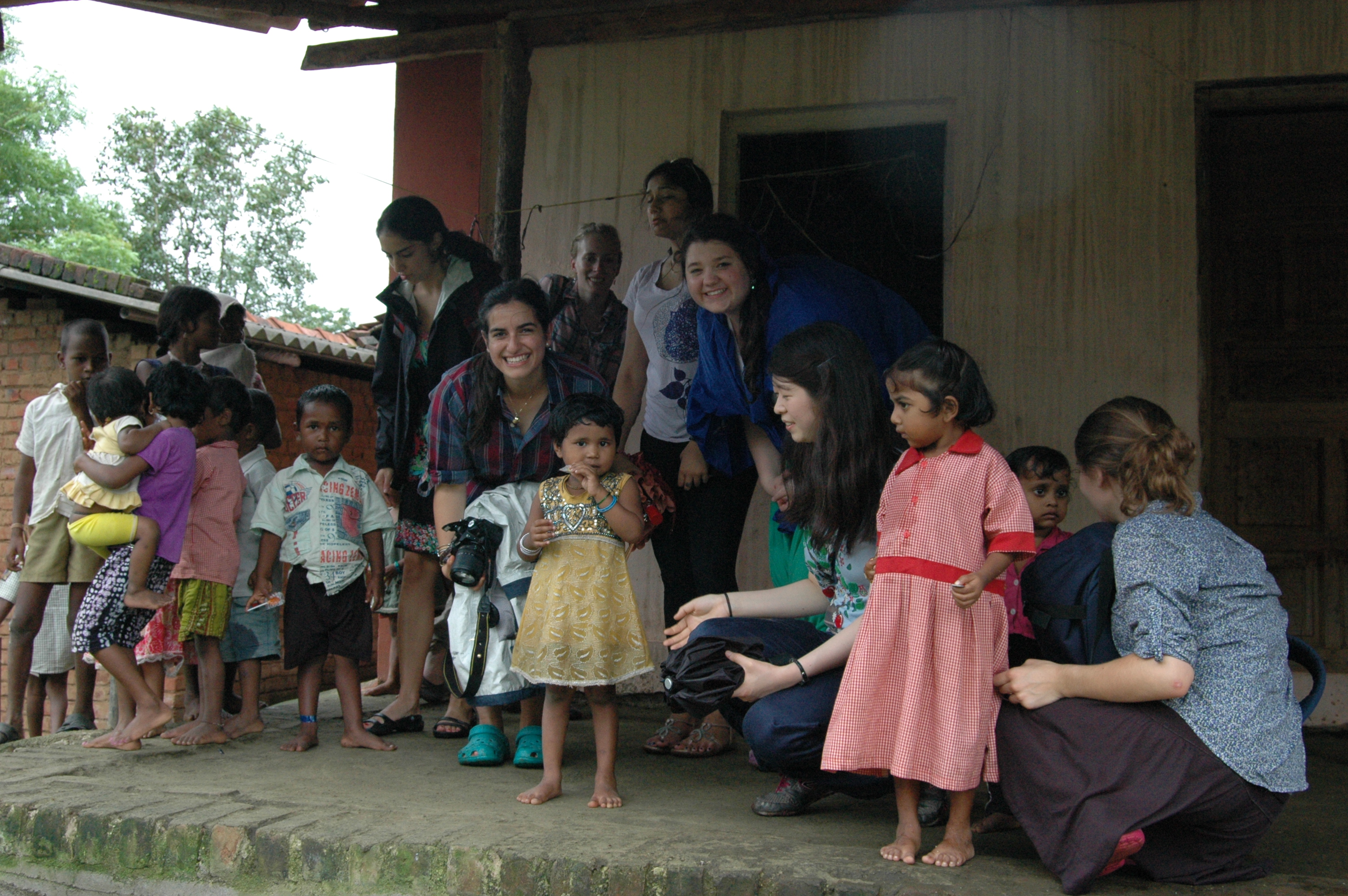
So I was on that hillside in Nepal, not really thinking about Atul Gawande, really just “being there” in a very Zen way.  I was absorbing the sunlight, the clear smell of the air with the faint touch of wood burning fires, watching the women in their colorful saris and kurtas walking from their mountain village homes.  I was entranced by how beautiful these women were, how adorable their children were.  I forgot about the MIRA cluster-randomized controlled trial documented in the article in The Lancet that had brought me there   I wasn’t thinking that the study included almost 30,000 women whose birth outcomes were monitored.  I wasn’t thinking about public health APIE or the classes I had taken to achieve my MPH or the thesis I wrote about global maternal mortality and the impact of birthing kits.  I was just being myself:  a woman in Nepal, sitting on a hillside, meeting other women, sitting beside the staff of MIRA.  We were a very small number of individuals who had made personal decisions to be together that day in November 2010.  Nothing that happened that day changed the world.  That meeting of a small number wasn’t documented in a peer reviewed journal article.  If it generated any statistical data, it was very small and possibly even outlier data.  But lives were changed.  I know because my life was changed.  This was public health and it was my private life close up and personal with the lives of the women I sat with, their personal stories, and the clothing we shared, my Tshirts and their scarves that we ended up exchanging.

“Write something,” wrote Dr. Gawande.  I have procrastinated for a long time about setting up this blog.  Lots of really important things interfered with my sitting down at my computer, learning how to use Word Press, deciding what I would include, who would be my audience, would in fact I have an audience?  Let’s see I had to do laundry. It was the holidays and I had to shop, set up the Christmas tree, knit scarves for just about everyone.  I had to organize my CD’s and learn how to use my new IPad.  I had to go out for dinner with friends.  I actually had to go to work every day.  But finally as 2011 slipped into 2012 I had another realization to go along with the realizing that public health was indeed personal.  A public health blog that would include my personal thoughts and feelings and experiences would also be an opportunity for participants to share their private lives in public health.

All of us working in public health are private individuals with our individual goals and passions and personal as well as professional reasons for working in public health.  We all have our moments of inspiration, our relationships with people who have inspired us: family, clients, patients, members of communities, a person we sat next to on the subway, or on a plane, or at a conference.  While we have all been focused on creating positive change with populations we have connected with individuals, with small numbers.

So I invite you to join me here at A Private Life in Public Health. I will post essays I have written about my personal experiences learning about a public health issue: the travel to programs I have visited, some people I have met, the changes that I have experienced personally and professionally.  I’ll add as many references as I can for those of you who would like to do more research on the topics.  I’ll invite some dear friends and colleagues to share their experiences, their journeys.  Please contribute your ideas and comments and your experiences as your private life in public health.

So please join me on this journey to health, friendship, and peace.  As Joseph Campbell wrote:

“As you go the way of Life, you will see a great chasm.

Jump!

It is not as far as you think.”

Karel Rose Amaranth, MPH, MA

Some references:


Gawande, A.  (2007). Better:  A surgeon’s notes on performance.  New York:  Henry Holt and Company.

Issel, L.  (2004).  Health program planning and evaluation:  a practical, systematic approach for community health.  Sudbury:  Jones and Bartlett.


Morrison, J., Tamang, S., Mesko, N., Osrin, D., Shrestha, B., Manandhar, M., Manandhar, D., et.al. Women’s health groups to improve perinatal care in rural Nepal. Retrieved April 10, 2010, from http://www.ncbi.nlm.nih.gov/pmc/articles/PMC1079874


From the online Merriman Dictionary

pri·vate  (prvt)

adj.

1.

a. Secluded from the sight, presence, or intrusion of others: a private hideaway.

b. Designed or intended for one’s exclusive use: a private room.

2.

a. Of or confined to the individual; personal: a private joke; private opinions.

b. Undertaken on an individual basis: private studies; private research.

c. Of, relating to, or receiving special hospital services and privileges: a private patient.

3. Not available for public use, control, or participation: a private club; a private party.

4.

a. Belonging to a particular person or persons, as opposed to the public or the government: private property.

b. Of, relating to, or derived from nongovernment sources: private funding.

c. Conducted and supported primarily by individuals or groups not affiliated with governmental agencies or corporations: a private college; a private sanatorium.

d. Enrolled in or attending a private school: a private student.

5. Not holding an official or public position: a private citizen.

6.

a. Not for public knowledge or disclosure; secret: private papers; a private communication.

b. Not appropriate for use or display in public; intimate: private behavior; a private tragedy.

c. Placing a high value on personal privacy: a private person.

n.

The name “public” originates with the Latinpopulus” or “poplicus“, and in general denotes some mass population (“the people”) in association with some matter of common interest. So in political science and history, a public is a population of individuals in association with civic affairs, or affairs of office or state. In social psychology, marketing, and public relations, a public has a more situational definition.[5] John Dewey defined (Dewey 1927) a public as a group of people who, in facing a similar problem, recognize it and organize themselves to address it. Dewey’s definition of a public is thus situational: people organized about a situation. Built upon this situational definition of a public is the situational theory of publics by James E. Grunig (Grunig 1983), which talks of nonpublics (who have no problem), latent publics (who have a problem), aware publics (who recognize that they have a problem), and active publics (who do something about their problem).[6][7]And so public health is organizing populations around the situations of health, usually health problems, illnesses, behaviors contributing to poor health outcomes morbidity, mortality

Next Newer Entries